35
Slope 3 is a fast-moving 3D casual arcade game that runs directly in the browser. There is no setup phase and no warm-up moment. As soon as a run starts, the ball is already rolling forward. The track floats in open space, narrow and exposed, which makes even small movements feel risky. Instead of explaining rules in detail, the game lets players learn through motion, mistakes, and repetition.
Each run begins with the ball moving automatically along the track. You do not control speed, only direction. The objective is simple: stay on the surface and avoid falling off for as long as possible. As distance increases, speed rises and turns become harder to read. There are no checkpoints, so one wrong move ends the run instantly. Because the layout shifts slightly between attempts, progress depends more on focus than memory.
• Left Arrow or A: Move the ball to the left
• Right Arrow or D: Move the ball to the right
• Holding a key: Allows gradual steering adjustments
• Keyboard input: Required for stable control at higher speed
Slope 3 feels responsive, but not forgiving. Small inputs usually work better than sudden corrections. Momentum matters, and oversteering often causes the ball to slide off the edge. Once the movement rhythm becomes familiar, control starts to feel more natural, especially during longer runs. On modern browsers, input remains steady enough to keep steering predictable as speed increases.
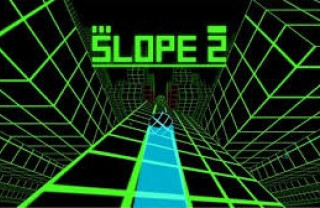
The challenge grows over time rather than hitting all at once. Early runs give players space to adjust, but later sections demand constant attention, with pacing and input staying consistent on modern browsers as the platform continues to monitor the title for overall stability. Games like Slope 2 and Slope Snowball follow a similar approach, emphasizing speed, balance, and endurance, where calm reactions matter more than aggressive play.
Staying closer to the center of the track tends to feel more forgiving when the path shifts suddenly, while looking slightly ahead helps the flow of movement feel more predictable. Smoother steering generally maintains control better than sharp corrections as speed increases, and quick restarts often keep the overall rhythm of play intact.